Circle Expands to Singapore — Stablecoins Enter Asia’s Payments War
Circle launches USDC payouts in Singapore, signaling stablecoins are evolving into real payment infrastructure as Asia becomes the next fintech battleground.
Bitkub’s decision to disable website withdrawals marks a clear shift toward stronger security standards and tighter regulatory alignment in Thailand’s crypto industry. The move suggests that mobile-first authentication and controlled custody models will likely become the new norm for digital asset platforms in Thailand and Southeast Asia.
In Asia, stablecoins are evolving from a niche crypto instrument into a core layer of financial infrastructure that can accelerate payments, trade, and cross-border settlements. Their long-term viability, however, depends on strong regulation that preserves monetary sovereignty while still enabling financial innovation.
Thailand is deliberately shifting its crypto market toward an institution-first model, using crypto ETFs, regulated futures, and tokenization to channel capital through familiar, tightly controlled financial structures. The strategy trades short-term openness for long-term credibility, signaling that Southeast Asia’s next crypto growth phase will be driven less by retail hype and more by regulated institutional liquidity.
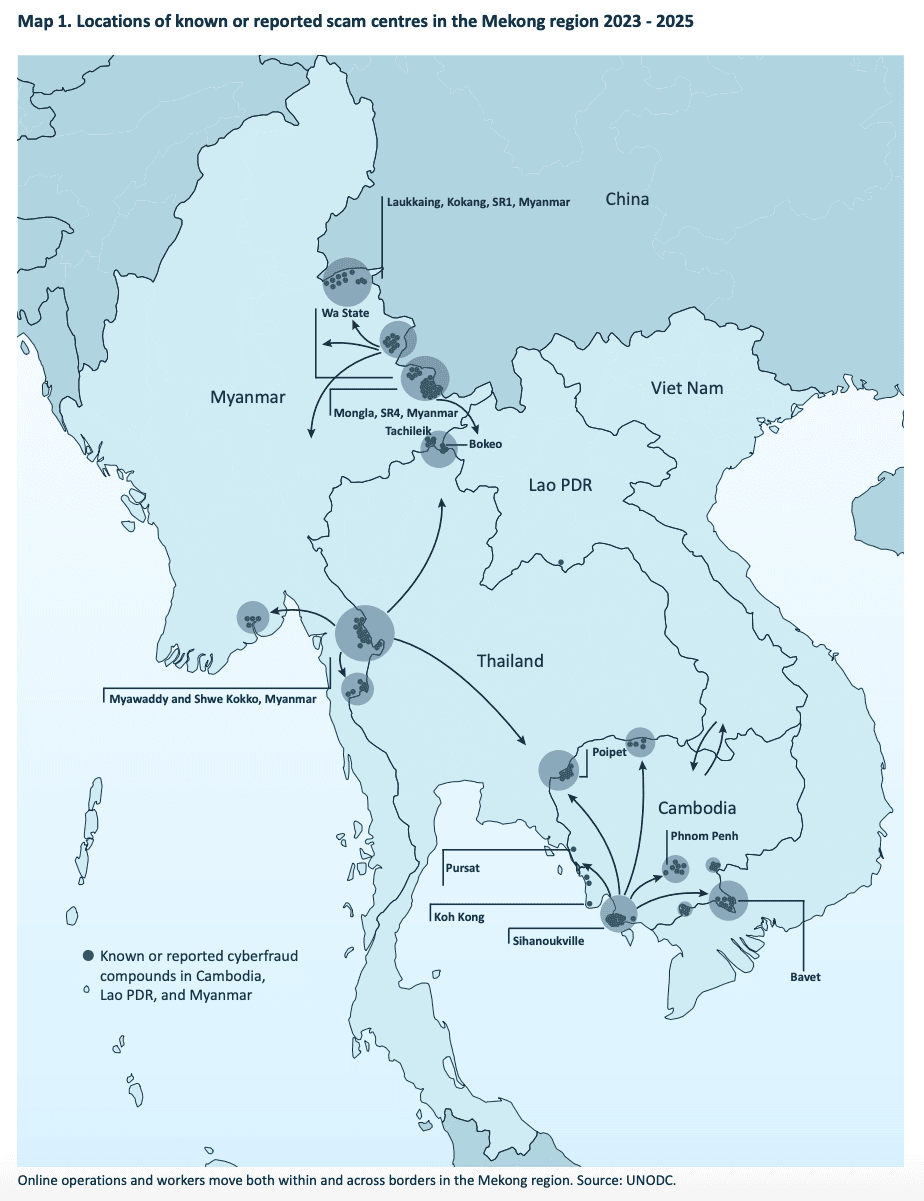
Thailand’s repatriation of Chinese scam suspects marks a turning point where crypto-enabled crime in Southeast Asia is moving from regulatory blind spots into coordinated, state-level enforcement. The message for the market is clear: crypto itself remains, but anonymity without compliance is rapidly disappearing as on-chain transparency meets geopolitical pressure.
Thailand has effectively placed USDT on the same level as cash and gold by integrating stablecoins into its unified framework for monitoring “grey” financial flows and cross-border capital movement. This sends a clear signal to the market: in 2026, crypto is no longer treated as an exception—any value-transfer instrument will be regulated as real money.
In Thailand, an experiment in exchanging biometrics for cryptocurrency has faced a harsh government response due to the risk of data breaches affecting over 1.2 million citizens and the legal uncertainty surrounding the model. The market implications are clear: projects at the intersection of crypto-identification and personal data in Thailand and Southeast Asia will no longer be able to scale without transparent data storage, clear user consent, and direct regulatory approval.
In 2026, the crypto market is entering an institutional growth phase with the potential to reach new highs, but in Thailand this momentum is constrained by a weak economy, high household debt, and political uncertainty. As a result, crypto adoption in Thailand is likely to be driven more by institutional and professional investors rather than mass retail participation.
Poland’s Sejm failed to override a presidential veto on a key crypto regulation bill, halting MiCA alignment and creating short-term freedom but long-term uncertainty for Bitcoin and digital asset firms. ATH.LIVE analysts say the delay may boost grassroots BTC adoption while undermining institutional confidence.
Thailand halts a nationwide iris-scan crypto program over PDPA violations and security risks, ordering the deletion of 1.2M biometric records and highlighting global concerns over consent and privacy in biometric systems.
Japan’s FSA is preparing to reclassify 105 cryptocurrencies, including Bitcoin and Ethereum, as financial products — slashing taxes from up to 55% to a flat 20% and introducing clear insider trading rules for digital assets.
Japan’s Financial Services Agency will create a new bureau in 2026 overseeing insurance, asset management, and crypto. The move aims to restore trust after scandals and position Tokyo as a digital finance hub.
Have questions or want to collaborate? Reach us at: [email protected]