Major Crypto Exchanges Linked to Global Money Laundering Network, ICIJ Investigation Finds
🌍 Global Crypto Exchanges Linked to Massive Criminal Money Flows, ICIJ Investigation Reveals
A 10-month cross-border probe exposes how the world’s biggest crypto platforms became silent pipelines for drug cartels, scam syndicates, and sanctioned hackers.
A sweeping new report by the International Consortium of Investigative Journalists (ICIJ) has uncovered how leading crypto exchanges—including Binance, OKX, Coinbase, Kraken, Bybit, and Kucoin—were repeatedly used to move criminal proceeds across continents. The investigation spans 35 countries, 37 media partners, and thousands of traced on-chain transactions that reveal a long-ignored truth: illicit money flowed through the core of the crypto industry with alarming ease. 💸🌐
ICIJ’s findings show that money launderers linked to drug cartels, North Korean hacking units, and Southeast Asian scam syndicates sent millions through mainstream crypto platforms—often undetected, and sometimes even while the exchanges were under U.S. compliance monitoring.
💥 The Huione Pipeline: $408 Million Moved Through Major Exchanges
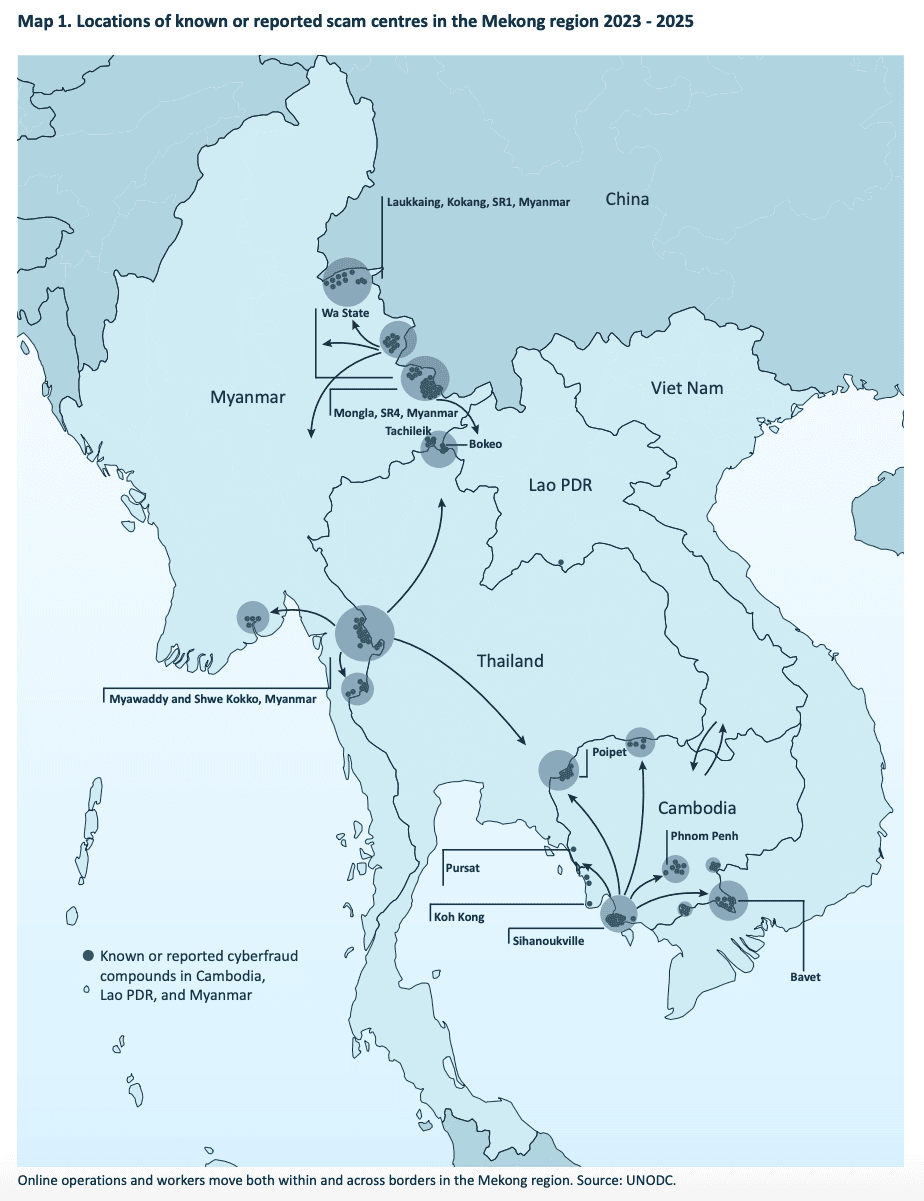
One of the most striking revelations involves the Huione Group, a Cambodian conglomerate designated by the U.S. Treasury as a “primary money laundering concern.”
ICIJ discovered that Huione moved about $1 million per day in USDT to Binance accounts throughout July 2025—part of a total $408 million transferred between July 2024 and July 2025. These transfers occurred while Binance was operating under the supervision of two court-appointed monitors following its 2023 plea deal and $4.3 billion penalty for AML violations.
And Binance wasn’t alone.
⚠️ OKX Also in the Spotlight
ICIJ found that more than $226 million in Huione-linked funds entered OKX customer accounts in the five months after the exchange paid $504 million in penalties and pleaded guilty in the U.S. for operating an unlicensed money transmitter in February 2025.
Even after Huione’s formal designation as a global laundering threat in May, the transfers did not stop.
🏙️ The Shadow Network: Cash Desks and Crypto Couriers
The investigation also uncovered a parallel shadow economy built around unregulated cash desks and crypto courier services in global cities including:
- 🇭🇰 Hong Kong
- 🇨🇦 Toronto
- 🇬🇧 London
- 🇹🇷 Istanbul
These operations allow users to swap large sums of crypto for physical cash with minimal oversight, providing a direct, anonymous bridge between criminal actors and major exchanges.
Through these grey-market intermediaries, illicit funds could enter or exit regulated platforms without leaving meaningful compliance footprints.
🎭 Scam Victims Around the World Were Unknowingly Linked to the Same Flows
ICIJ also mapped how stolen funds from scam victims in 12 countries passed through the same exchanges. One case involved Vladimir Okhotnikov, who allegedly siphoned at least $340 million from investors between 2020 and 2022 via a manipulated crypto investment platform. Investigators report he continued running similar schemes from Dubai.
The takeaway: the same rails used by cybercriminals and scam syndicates often run straight through the world’s most reputable exchanges.
🧩 Why This Matters
- 🌐 It exposes a coordinated global laundering ecosystem operating in plain sight
- 💱 Even top-tier exchanges remain vulnerable despite regulation
- 🚨 Criminal organizations exploited compliance gaps for years
- 🧭 Scam victims and cartel funds often flowed through identical pathways
- 📉 The findings may trigger renewed regulatory pressure worldwide
For regulators, this investigation signals a tightening storm. For exchanges, it marks a turning point. And for users—an increasingly urgent reminder that crypto’s financial plumbing reaches far deeper than most imagine.
⚠️ TL;DR
A 10-month ICIJ investigation reveals how major exchanges—including Binance, OKX, Coinbase, Kraken, Bybit, and Kucoin—served as quiet financial pipelines for money linked to cartels, scam syndicates, and North Korean hackers. The report exposes over $408M from the Cambodian Huione Group flowing through Binance, plus $226M into OKX accounts, even after penalties and compliance monitors. Unregulated crypto cash desks worldwide further fueled the shadow economy. ICIJ warns: the global laundering network is bigger, faster, and closer to mainstream crypto than anyone realized.

Recent News




All Time High • Live
Have questions or want to collaborate? Reach us at: [email protected]