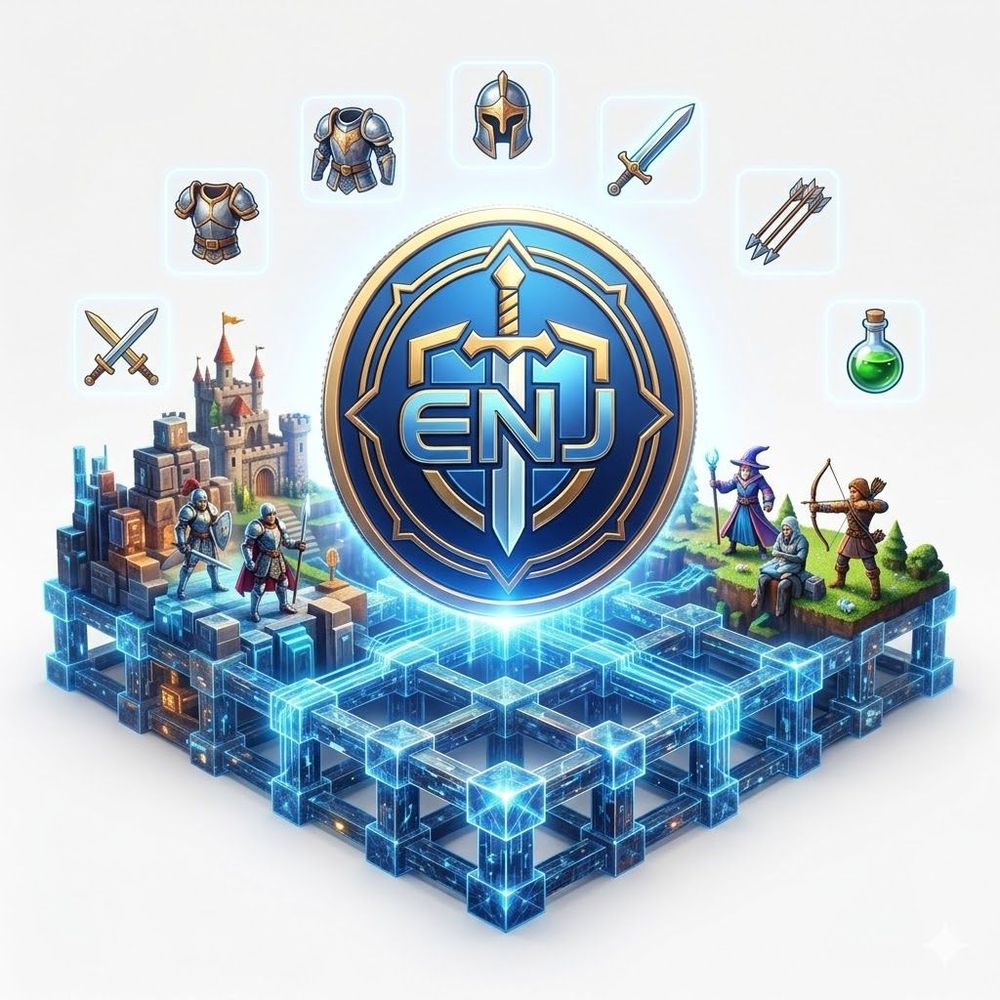
Enjin Coin (ENJ): The NFT Infrastructure Most People Forgot
🏗️ Enjin: The Infrastructure Most People Already Use Without Realizing
Most people remember the NFT boom.
Almost nobody remembers the infrastructure underneath it.
🧠 TL;DR
✨ Enjin helped create ERC-1155 — one of the standards behind modern NFTs
🎮 The company focused on gaming infrastructure long before “Web3 gaming” became a trend
🔧 Instead of hype, Enjin spent years building wallets, APIs and developer tools
📉 The NFT bubble collapsed — but the infrastructure stayed
🪙 ENJ remains relatively small compared to newer crypto narratives despite its historical influence
🎮 Before “Web3 Gaming” Became a Buzzword
Back in 2021, my entire timeline looked the same:
- virtual land sales
- metaverse screenshots
- million-dollar JPEGs
- people explaining why digital real estate would replace actual cities
Every project claimed it was building “the future.”
Most of them disappeared.
Meanwhile, companies like Enjin were doing something far less cinematic: building infrastructure nobody wanted to talk about during a bull market.
APIs.
Wallet systems.
Asset standards.
Developer tooling.
Not exactly viral content.
But here’s the strange part:
There’s a decent chance you’ve already interacted with technology connected to Enjin’s ecosystem — without even realizing it.
That’s usually how infrastructure works.
🌐 Official ecosystem:
https://www.enjin.io/
🧩 The Part Most People Missed: ERC-1155
Ethereum had a problem nobody outside developer circles cared about
In 2017 Ethereum basically had two separate worlds:
🪙 ERC-20
For fungible assets:
- tokens
- currencies
- identical units
🖼 ERC-721
For unique assets:
- NFTs
- collectibles
- one-of-one items
Games needed both.
One game might contain:
- currencies
- skins
- weapons
- collectibles
- limited-edition items
Developers had to split logic across multiple smart contracts.
It was inefficient. Expensive. Annoying.
Then Witek Radomski — Enjin’s CTO — proposed something simpler:
“What if one contract could manage multiple asset types together?”
That idea eventually became ERC-1155.
At the time? Almost nobody cared.
Today it’s one of the standards deeply embedded into blockchain gaming infrastructure.
🔍 Related reading:
ERC-1155: Killing Ethereum Fragmentation
🧠 The Smartest Thing Enjin Did
Honestly?
Enjin understood something early that a lot of crypto companies still struggle with:
Most users do not want to interact with blockchain directly.
They want outcomes.
Nobody wakes up excited to:
- manage gas fees
- approve wallet signatures
- store seed phrases
- debug failed transactions
Players just want their items to work.
So instead of forcing every game studio to become a blockchain engineering company, Enjin built abstraction layers around the complexity.
That included:
🔧 Managed Wallets
Wallets created directly inside apps and games.
⚙️ Wallet Daemon Systems
Backend automation for blockchain transactions.
🔗 Enjin Platform API
Infrastructure for:
- minting assets
- distributing NFTs
- tracking ownership
- managing game economies
📚 Developer infrastructure:
Enjin Documentation
📉 Then the NFT Bubble Exploded… and Collapsed
This part matters too.
Because pretending the last cycle went perfectly would make this article feel fake.
A huge part of blockchain gaming became financial speculation wearing a gaming costume.
Some projects treated players more like liquidity than communities.
Traditional gamers noticed immediately — and pushed back hard.
And honestly?
Some of the criticism was deserved.
That backlash quietly killed a lot of narratives around NFTs and blockchain gaming.
But something interesting happened underneath the collapse:
✨ ERC-1155 stayed
✨ Developer tooling stayed
✨ Infrastructure stayed
The speculation layer disappeared first.
That usually tells you where the real value was hiding.
🔄 While Everyone Chased Hype, Enjin Kept Building
This is probably the least exciting part of the story.
Which is exactly why I keep paying attention to it.
While the market moved toward:
- AI narratives
- memecoins
- modular chains
- hyper-financialized DeFi
Enjin kept working on:
- cross-chain systems
- dynamic NFTs
- wallet infrastructure
- developer tooling
- middleware architecture
Not flashy.
But infrastructure companies rarely look exciting in real time.
AWS looked boring once too.
Most foundational systems do.
📱 The Ecosystem Is Bigger Than Most People Think
A lot of people still think Enjin is “just an NFT token.”
It’s much broader than that.
🧿 Enjin Wallet
One of the earlier crypto wallets focused heavily on usability rather than maximalist complexity.
Supports:
- BTC
- ETH
- ENJ
- major token standards
🔗 Product page:
https://www.enjin.io/wallet
🖼 NFT.io Marketplace
Enjin’s marketplace infrastructure launched in 2023.
Includes:
- minting
- trading
- asset distribution systems
One feature I genuinely like is Enjin Beam.
Instead of forcing users through complicated onboarding flows, NFTs can be distributed through QR codes.
Small UX decision.
Huge difference for normal people.
🔗 Marketplace:
https://nft.io/
🤝 Major Companies Quietly Experimented With It Too
Over the years Enjin integrations and collaborations included names like:
- Microsoft
- Samsung
- Square Enix
- Entropia Universe
Important clarification though:
This does not mean Enjin “won” blockchain gaming.
Crypto loves turning every partnership into mythology.
Reality is usually less dramatic.
What it does mean is that large companies were willing to experiment with infrastructure connected to the ecosystem while most of the industry was still arguing about whether NFTs even had a future.
That still matters.
🪙 So Where Does ENJ Actually Stand Now?
That’s the strange part.
ENJ sits far outside the center of crypto attention today.
And if you only follow narratives, you’d probably assume the project disappeared years ago.
But infrastructure doesn’t move at the speed of narratives.
Sometimes it survives much longer.
That’s why I think Enjin makes more sense as an infrastructure story than a hype-cycle story.
Because underneath every loud technology trend, somebody still has to build systems developers can actually use.
Most people only notice those systems after they’re already everywhere.
📚 Read Also
Recent News





All Time High • Live
Have questions or want to collaborate? Reach us at: [email protected]