The End of the Halving Cycle: Bitcoin’s $60B ETF Era Redefines Market Structure
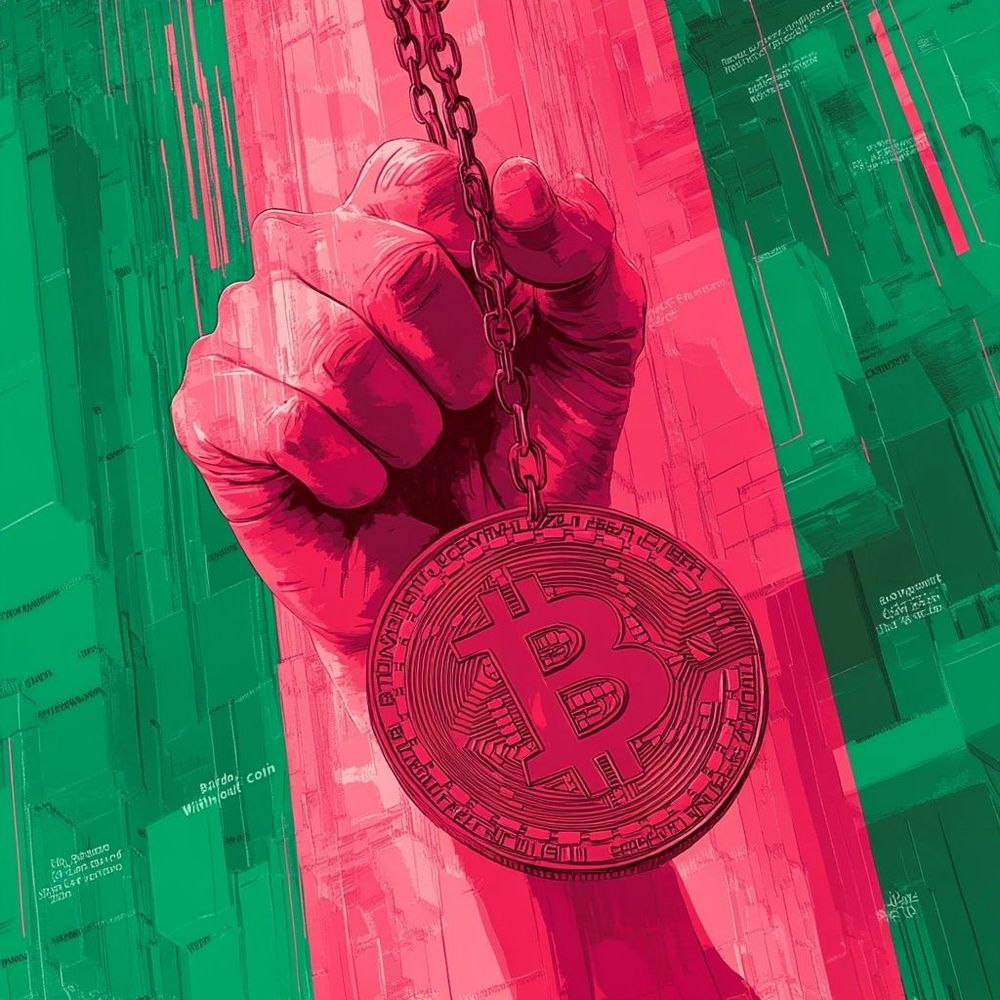
The Halving Is Dead: Bitcoin’s $60B ETF Era Redefines Market Cycles
Despite record ETF inflows, surging corporate treasuries, and sovereign adoption, Bitcoin’s legendary four-year halving rhythm may finally be breaking. The 2026 cycle won’t be about block rewards — it’s about liquidity regimes, derivatives, and trillion-dollar balance sheets.
⚡ Quick Hits
- 💸 ETF Inflows (2025): $60B+ — half into Bitcoin
- 🏦 Corporate Treasuries: Growing BTC reserves across S&P firms
- 📊 Long-Term Holder Supply: 78.5% of circulating BTC — all in profit
- 🧮 Structural Floor: $75K–$80K (new bear-market baseline)
- 🌐 Institutional Shift: Derivatives, ETFs, and sovereign funds dominate
🔄 Has the Halving Cycle Snapped?
For over a decade, Bitcoin’s four-year halving was treated as gospel — the invisible metronome of bull and bear cycles.
Now, that rhythm is fading.
In September 2025, $1.9B in ETF inflows poured into U.S. markets, even as exchange deposits collapsed to record lows. Prices hit new all-time highs — but the old halving mechanics didn’t explain it anymore.
“The halving doesn’t matter anymore; it hasn’t mattered for a couple of cycles,” said James Check, Co-Founder of Checkonchain Analytics and former Glassnode analyst.
He points to an evolving market where ETF demand, derivative layers, and sovereign accumulation have replaced miner issuance as the key liquidity levers.
Bitcoin no longer reacts to its own cycles — it reacts to global liquidity.
🧱 The New Structure: ETFs, Treasuries, Sovereigns
The data is clear:
- $60B in ETF inflows since approval.
- Long-term holders own ~78.5% of all BTC.
- Miners issue only ~450 BTC/day — a fraction of new demand.
“There’s 3.4 million BTC on exchanges, but that doesn’t define scarcity,” Check explains. “Long-term holder supply is what matters — and that’s not moving.”
The result is a market now anchored by institutions, not miners. ETF custodians like BlackRock, Fidelity, and ARK dominate global flows, while derivatives trading sets price direction more than spot demand ever did.
BlackRock’s IBIT alone controls a majority of global ETF inflows, turning Bitcoin into a quasi-indexed asset, sensitive to macro liquidity and rate cycles rather than block halving events.
🧠 Metrics That No Longer Work
Traditional tools like Realized Price and MVRV Z-Score are losing precision in this new market.
Check calls the old models “useful, but obsolete”:
“Realized Price includes Satoshi’s coins — it’s outdated. Bear markets now form around active cost bases, near $75K–$80K.”
That’s the new structural floor: ETF and corporate cost clusters, not miner break-evens.
Even MVRV thresholds have drifted upward as institutions recalibrate what “fair value” means in an era of synthetic yield, derivatives hedging, and sovereign-scale liquidity.
🏛️ Concentration and Sovereign Capital
Another defining shift: who owns the Bitcoin.
Sovereign wealth funds are entering quietly, while most ETF custody sits with Coinbase — creating concentration risk that’s more political than technical.
Still, Check dismisses the systemic threat:
“Coinbase custody is concentrated, but Bitcoin’s network ensures coins can’t be lost. Proof-of-work sorts it out.”
In other words: Bitcoin’s decentralization now coexists with institutional custody. The balance between them defines 2026’s stability.
💡 Liquidity, Not Halving, Sets the Floor
The next phase of Bitcoin’s evolution won’t be about halvings or supply shocks — it’ll be about liquidity regimes and capital allocation.
- Derivatives volume dictates volatility.
- ETFs anchor demand from pension and sovereign funds.
- Long-term holders set price resilience through behavioral anchoring.
“There is no perfect metric,” Check advises. “If BTC falls to $75K, have a plan. If it rises to $150K, have a plan too.”
Bitcoin has entered its post-halving era — a macro asset responding to liquidity, not code.
TL;DR
- ⛓️ Bitcoin’s classic halving cycle has lost predictive power.
- 💵 ETFs and sovereign capital now drive liquidity and price floors.
- 📊 Long-term holders control 78.5% of supply, setting a new $75K–$80K floor.
- ⚙️ Derivatives and institutional flows outmuscle miner issuance.
- 🧭 2026 and beyond: a liquidity-driven market, not a block-driven one.
Recent News









All Time High • Live
Have questions or want to collaborate? Reach us at: [email protected]