Stablecoins and the Future of Money in Asia
Stablecoins in Asia: From Crypto Plumbing to a New Layer of Money
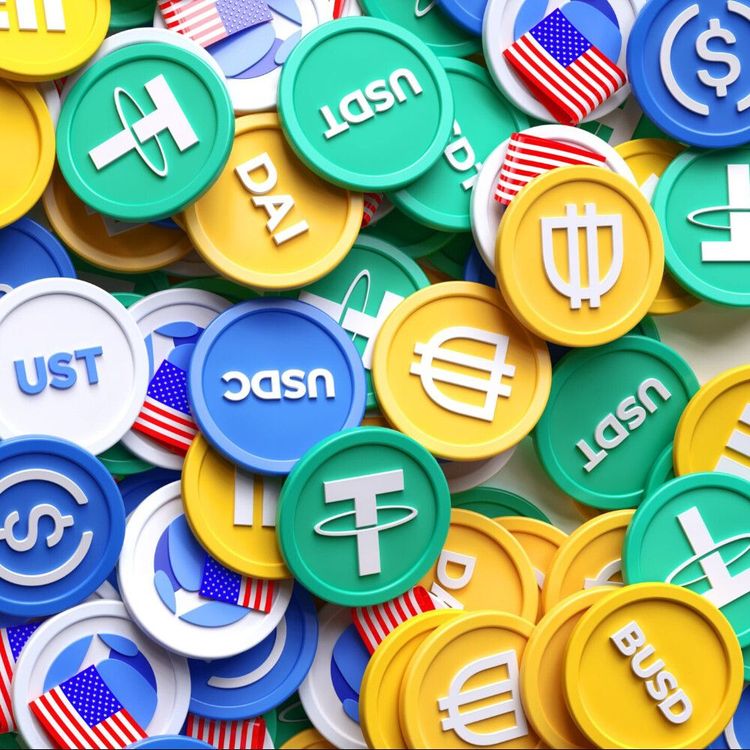
Stablecoins are rapidly evolving from a niche crypto tool into a critical layer of Asia’s financial infrastructure, reshaping payments, cross-border trade, and capital flows. While they promise efficiency and innovation, policymakers across Asia face a growing challenge: how to harness stablecoins’ benefits without undermining monetary sovereignty or financial stability.
- Stablecoins now settle trillions of dollars annually in global on-chain transactions
- Asia is one of the fastest-growing regions for stablecoin usage, driven by trade, remittances, and digital payments
- More than 90% of stablecoins remain USD-pegged, raising concerns over “digital dollarization”
- Regulators increasingly view stablecoins as e-money equivalents, not speculative crypto assets
Stablecoins: The Quiet Infrastructure of Crypto
For over a decade, crypto markets have been defined by volatility. Yet beneath the noise, stablecoins have emerged as the system’s quiet workhorses — the settlement layer connecting blockchains to the real economy.
Functionally, stablecoins resemble familiar Asian payment instruments such as GrabPay, Alipay, or PromptPay, but with one crucial difference: they operate natively on open blockchains.
This allows value to move instantly across borders without correspondent banks, FX intermediaries, or limited operating hours.
In Asia, where cross-border trade, migrant remittances, and fragmented payment systems dominate economic activity, this efficiency is not theoretical — it is immediately practical.
Regulation Enters the Chat
The global regulatory mood is shifting. In the United States, legislative efforts such as the GENIUS Act signal that stablecoins are no longer seen as fringe crypto experiments but as systemic financial instruments.
Asia is paying close attention.
The ASEAN+3 Macroeconomic Research Office (AMRO) has framed stablecoins as a double-edged sword:
- On one hand, they can lower transaction costs, improve financial inclusion, and modernize payment rails
- On the other, poorly regulated stablecoins risk eroding capital controls, weakening domestic currencies, and fragmenting monetary systems
This tension lies at the heart of Asia’s policy debate.
The Dollar Problem — and a Possible Escape
One of the most common concerns raised by Asian policymakers is “digital dollarization.” With most stablecoins pegged to the US dollar, widespread adoption could deepen Asia’s dependence on USD liquidity — even in domestic transactions.
But there is another interpretation.
Stablecoins do not have to reinforce dollar dominance. In fact, they could enable direct currency-to-currency interaction. Think of stablecoins as a “Google Translate for money” — allowing local currencies to exchange value seamlessly without routing everything through USD-based banking rails.
Local-currency stablecoins, if properly regulated and interoperable, could reduce FX friction while preserving monetary autonomy.
Lessons from Financial History
History offers a clear warning. In the 19th century, loosely regulated private banknotes — so-called wildcat banking — created instability, bank runs, and loss of public trust.
Stablecoins face a similar risk profile.
Without strict reserve requirements, transparency, and redemption guarantees, they could become fragile substitutes for money rather than reliable extensions of it.
This is why regulators increasingly emphasize that authorized stablecoins must be redeemable at par, fully backed, and tightly supervised — similar to narrow banking models.
A Layered Monetary Future
AMRO and regional policymakers increasingly envision a layered monetary system:
- Central bank money (cash and reserves) as the foundation
- Commercial bank deposits for credit creation and lending
- Stablecoins as programmable, interoperable settlement tools
In this framework, stablecoins do not replace sovereign money — they extend its usability in a digital, cross-border world.
But the condition is clear: stability first, innovation second.
The Asian Balancing Act
Asia’s challenge is not whether stablecoins will be used — that question is already settled. The real issue is who controls the rules of issuance, backing, and convertibility.
Get it right, and stablecoins could:
- Modernize cross-border trade
- Strengthen regional currency cooperation
- Reduce dependence on legacy banking infrastructure
Get it wrong, and they risk becoming a shadow monetary system beyond state control.
Stablecoins are no longer just crypto plumbing. In Asia, they are emerging as a strategic financial tool — one that sits at the intersection of innovation, sovereignty, and geopolitics.
The winners will not be the regions that ban stablecoins outright, nor those that allow unchecked issuance, but those that design robust, transparent, and sovereign-compatible frameworks.
In the next phase of global finance, money will be programmable. Asia’s task is to ensure it remains governable.
Recent News





All Time High • Live
Have questions or want to collaborate? Reach us at: [email protected]