Crypto Under Pressure: Thailand Freezes 10K Accounts in Anti-Money Laundering Push
Thailand Freezes 10,000 Crypto Accounts as Regulators Tighten the Net on Money Laundering
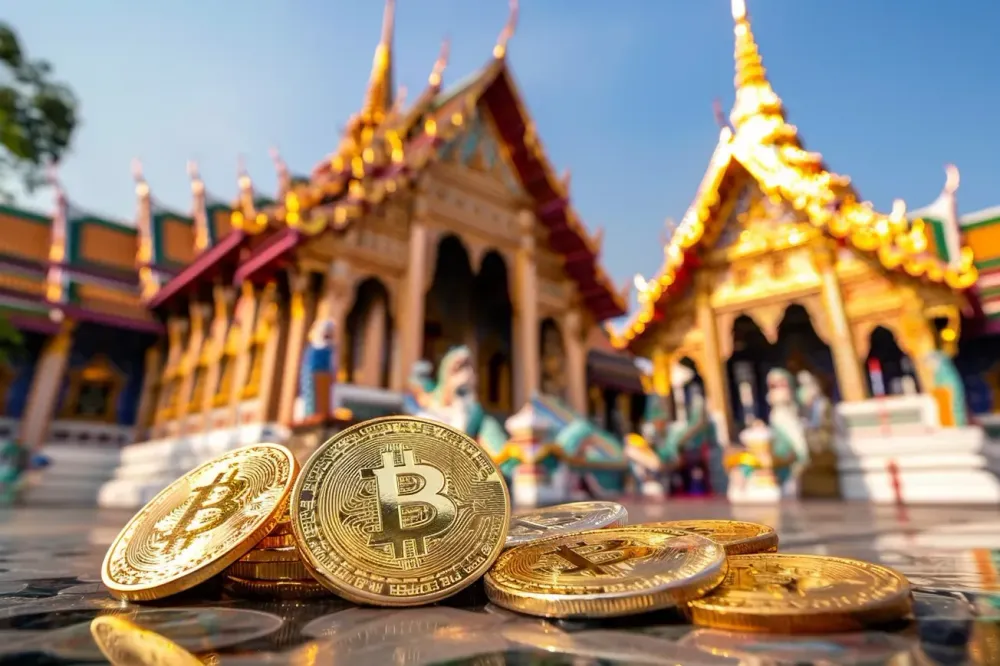
Thailand’s crypto industry just pulled the emergency brake on suspicious money flows. More than 10,000 cryptocurrency accounts have been frozen, as regulators and exchanges intensify a nationwide crackdown on financial crime and so-called “gray money” networks.
The move highlights how Thailand is rapidly turning its digital-asset sector into one of the most tightly monitored markets in Southeast Asia.
Key Stats
- 10,000+ crypto accounts frozen in the latest enforcement wave
- 47,692 mule accounts frozen across Thailand in 2025
- Multi-agency task force led by the Thai SEC
- Expanded data-sharing between exchanges, banks, and police
Crypto Exchanges Deploy Stronger Surveillance
The freeze followed the rollout of stricter monitoring systems across Thai crypto platforms. These systems slow down suspicious transactions and require additional identity verification for high-risk transfers.
According to Att Tongyai Asavanund, CEO of KuCoin Thailand and chairman of the Thai Digital Asset Operators Association, the new tools enabled exchanges to detect thousands of so-called “mule accounts.”
These accounts are commonly used by criminal groups as temporary wallets to move illicit funds across multiple platforms, making tracking more difficult.
A Nationwide Anti-Fraud Coalition
The crackdown stems from a coordinated initiative launched in February 2025 by the Securities and Exchange Commission of Thailand.
The effort brought together multiple institutions across Thailand’s financial and law-enforcement ecosystem, including:
- Bank of Thailand
- Cyber Crime Investigation Bureau
- Central Investigation Bureau
- Anti-Money Laundering Office
- Thai Bankers’ Association
The coalition’s goal is simple: identify and shut down mule accounts before criminal networks can move funds out of the system.
Nearly 50,000 Suspicious Accounts Frozen in Thailand
The results have been dramatic.
Authorities report that 47,692 suspected mule accounts were frozen in Thailand during 2025 alone, showing the scale of financial fraud networks operating through digital platforms.
The Thai Digital Asset Operators Association — which represents licensed crypto exchanges and brokers in Thailand — has played a central role in coordinating compliance standards across the industry.
Regulators Tighten Investigation Rules
At a regulatory workshop earlier in 2025, officials agreed to strengthen investigation guidelines for suspicious crypto activity.
According to Jomkwan Kongsakul, deputy secretary-general of the Securities and Exchange Commission of Thailand, regulators and industry participants have jointly created new monitoring standards for detecting and investigating suspicious accounts.
One major change: expanded data sharing between exchanges, banks, and law-enforcement agencies.
The goal is to detect suspicious transfers earlier and prevent funds from reaching mule accounts in the first place.
The Travel Rule Comes to Thailand
The crackdown is also tied to enforcement of the global Travel Rule, a compliance requirement adopted by many jurisdictions.
Under this rule, crypto service providers must collect and transmit identifying information about both the sender and recipient of certain digital-asset transfers.
In Thailand, the Securities and Exchange Commission of Thailand has been instructed to strictly enforce the rule — particularly when exchanges facilitate transfers between crypto wallets.
The Bigger Picture: Thailand’s War on “Gray Money”
The crypto crackdown is just one part of a broader campaign in Thailand targeting “gray money” across the economy.
Authorities have also stepped up monitoring in traditional sectors — including physical gold trading, which has historically been used to move untraceable wealth.
For regulators, the strategy is clear: close the loopholes before criminal networks can exploit them.
And as Thailand tightens compliance across both traditional finance and digital assets, the country is quickly becoming one of the most actively regulated crypto markets in Southeast Asia.
Recent News





All Time High • Live
Have questions or want to collaborate? Reach us at: [email protected]