What is Gas? Why Ethereum isn’t free — and why that’s a good thing
Gas fees and ETH — what’s actually going on
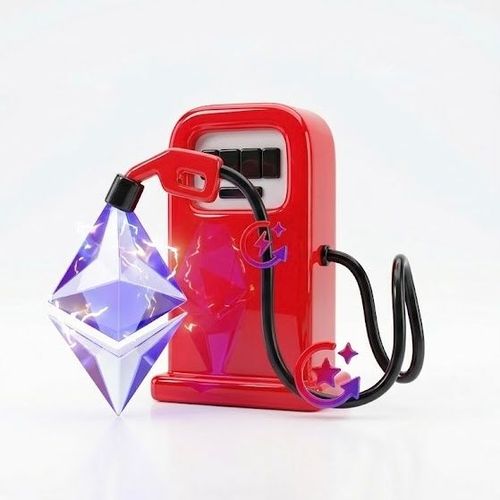
What a gas fee is ⛽
A gas fee is a fee for any action on Ethereum.
- Sending funds.
- Swapping tokens.
- Using an app.
The network does the work —
you pay for it.
Why this exists at all 🏗️
Ethereum is a shared network.
Everyone uses it at the same time.
Without fees:
- the network would clog,
- transactions wouldn’t go through,
- the system would break.
Gas fees are how Ethereum stays usable
instead of chaotic.
Where ETH comes in 💎
All gas fees on Ethereum are paid in ETH.
ETH is the network’s native currency.
It’s how you pay to use Ethereum.
Simply:
- gas = the work,
- ETH = the payment.
Why fees go up and down 📈
Fees depend on network activity.
When things are quiet — cheaper. When everyone acts at once — more expensive. No mystery.
Just demand and limited space.
Where the ETH goes 🤝
Not to “Ethereum.”
Not to developers.
ETH goes to the participants
who process and confirm transactions.
That’s what keeps the network running.
Why Ethereum gets so much attention for fees 🔥
Because people actually use it.
- More apps.
- More value.
- More activity.
Higher activity means
fees are more noticeable.
📝TL;DR: The Verdict
- Infrastructure: Gas fees are the cost of using Ethereum’s shared network. 🏗️
- Fuel: ETH is how that cost is paid; it's the only currency that powers the system. ⚡
- Reality: Sometimes you barely notice it, sometimes you do. It's just demand. 📊
- Goal: Without gas fees, Ethereum wouldn’t work at all. 🛡️
Once you stop expecting it to behave like a regular app and see it as infrastructure, it starts to make sense.
📚Read Also
Recent News






All Time High • Live
Have questions or want to collaborate? Reach us at: [email protected]