Scam Capital Flight: How Crackdowns Are Reshaping Crypto Crime in Asia
Thailand Repatriates 300 Chinese Crypto Scam Suspects as Regional Crackdown Enters New Phase
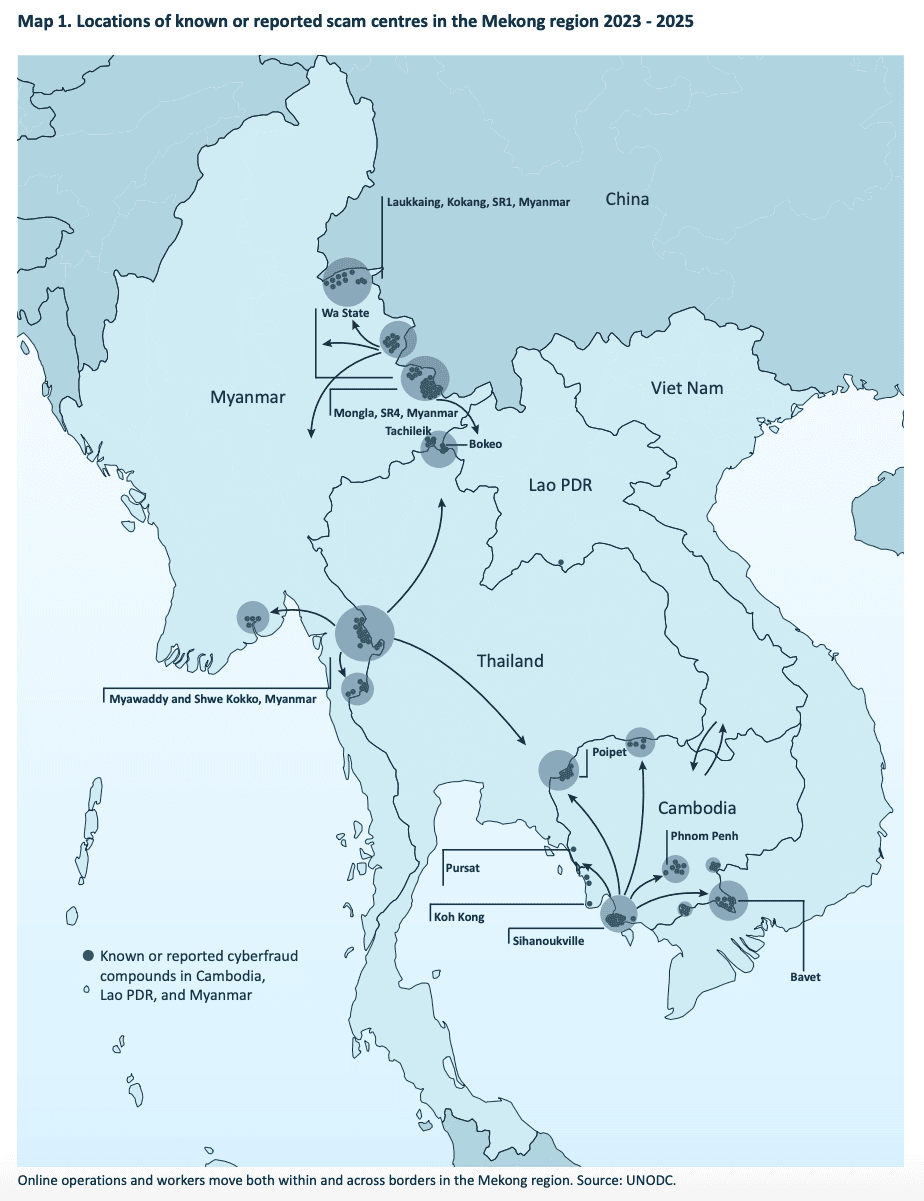
Thailand has begun repatriating more than 1,100 Chinese nationals linked to cross-border scam syndicates operating out of Myanmar — many of them heavily reliant on crypto rails such as USDT, P2P exchanges, and informal DeFi liquidity. The move signals a decisive shift in Southeast Asia’s approach to crypto-enabled crime, where enforcement is finally catching up with on-chain transparency.
- 300+ suspects already extradited from Mae Sot, Thailand
- 1,108 Chinese nationals scheduled for repatriation over four days
- Hundreds of millions of dollars in estimated annual scam losses (China)
- Primary tools used: Stablecoins, P2P crypto exchanges, cross-border wallets
Why This Matters
In traditional finance, fraud leaves a paper trail. In crypto, it leaves an immutable ledger — but only if someone is watching.
For years, scam syndicates operating along the Thailand–Myanmar border exploited regulatory gaps, weak enforcement, and the speed of crypto settlement to run industrial-scale fraud operations. These groups used stablecoins and P2P liquidity to move funds faster than banks — and often faster than law enforcement coordination.
That era is now ending.
Crypto Was the Backbone of the Scam Economy
According to regional security officials, many of the syndicates based in Myawaddy, Myanmar relied on crypto for four critical functions:
- Receiving funds from overseas victims without banking friction
- Rapid cross-border settlement using stablecoins
- Layering and laundering via wallets, OTC desks, and DeFi protocols
- Operational resilience, allowing teams to relocate quickly with private keys
Pseudonymity — not true privacy — was enough when enforcement was fragmented.
But pseudonymity breaks once states cooperate.
Why Pressure Suddenly Accelerated
China has dramatically intensified diplomatic pressure on both Thailand and Myanmar, demanding the return of Chinese nationals accused of defrauding citizens at home.
The trigger came in October, when Myanmar’s military launched targeted strikes against scam compounds in Myawaddy. Thousands fled. Some were detained. Others escaped — allegedly with hardware wallets, servers, and crypto credentials — and attempted to re-establish operations elsewhere.
Thailand became the choke point.
Thailand’s New Role: Digital Gatekeeper
Before deportation, Thai authorities:
- Conducted biometric identification
- Collected digital and personal records
- Blacklisted suspects from re-entering Thailand
- Coordinated directly with Chinese enforcement agencies
This reflects a strategic shift: Thailand is positioning itself not just as a physical transit hub, but as a regional compliance and digital enforcement node in Southeast Asia.
In crypto terms, Thailand is no longer neutral infrastructure — it is becoming a filter.
What This Signals for Crypto in Southeast Asia
This crackdown carries three clear implications:
- Crypto crime is now a geopolitical issue, not a niche cyber problem
- On-chain analytics + state coordination are closing escape routes
- Grey-zone P2P markets will face tighter scrutiny across the region
For legitimate crypto businesses, this is not bearish — it is clarifying.
Capital flows toward jurisdictions where rules are enforced predictably.
The Bigger Picture
Scam syndicates treated crypto as a censorship-resistant escape hatch. What they missed is that blockchains remember everything — and governments learn.
Thailand’s extradition of hundreds of suspects marks a turning point: Southeast Asia is no longer a blind spot for crypto enforcement. It is becoming a proving ground for how digital finance integrates with real-world accountability.
Crypto doesn’t disappear. But anonymity without compliance does.

Recent News








All Time High • Live
Have questions or want to collaborate? Reach us at: [email protected]