Thailand Is Financializing Crypto — On Purpose
Thailand Bets on Crypto ETFs as Institutional Capital Eyes Southeast Asia
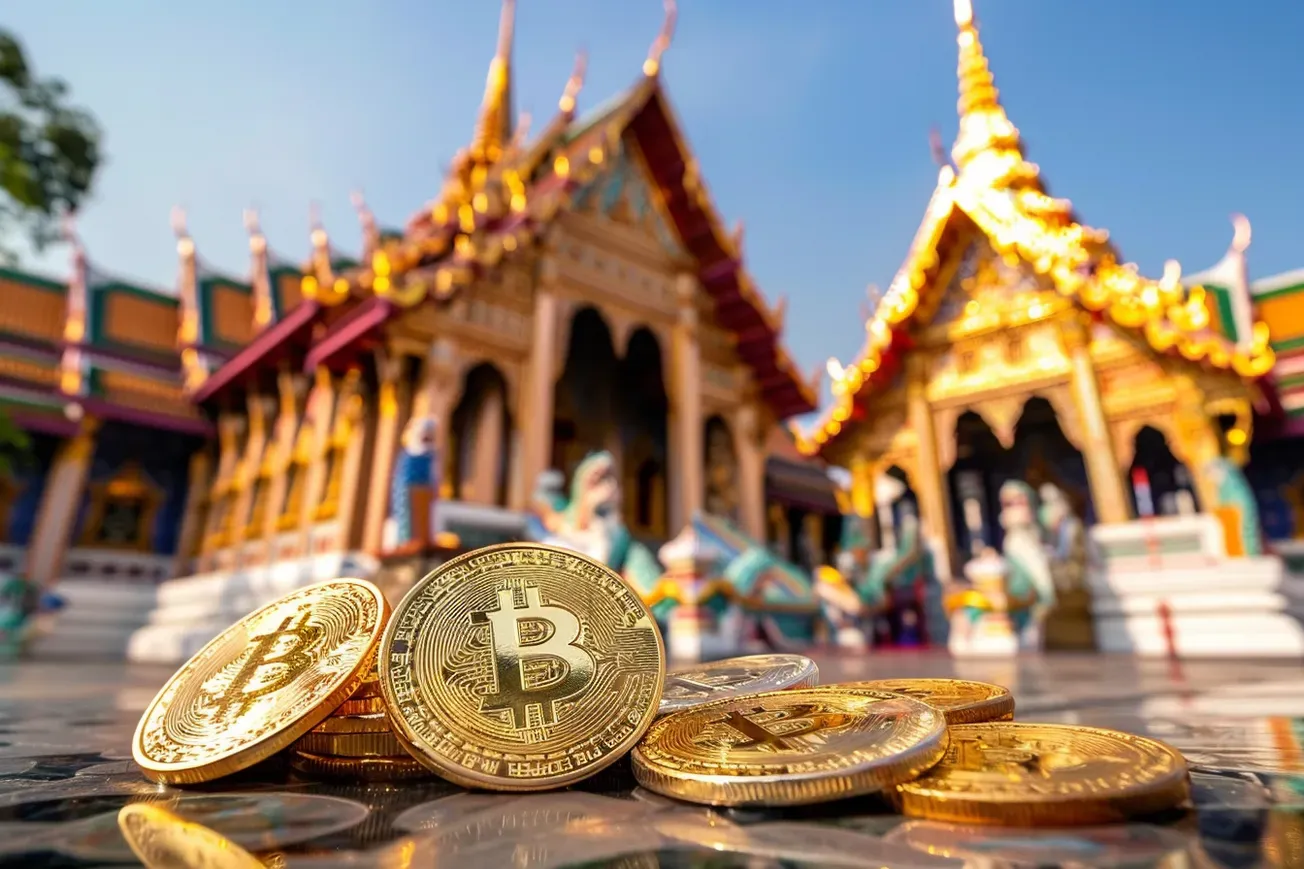
Thailand is moving from retail-driven crypto adoption to an institution-first market model. New rules for crypto ETFs, futures trading, and tokenized assets could redefine how capital enters digital markets in Southeast Asia.
Thailand’s Securities and Exchange Commission (SEC) is preparing to roll out regulations for crypto ETFs, crypto futures, and tokenized investment products in early 2025, aiming to position the country as a regional institutional crypto hub.
At the same time, regulators are tightening oversight of influencers and exchanges — signaling a clear shift: fewer players, higher barriers, more trust.
- 📅 Crypto ETF guidelines: Expected early 2025
- 📊 Portfolio allocation cap: Up to 5% in digital assets
- 💰 Bitkub daily volume: ~$60 million
- 🏦 Futures trading venue: Thailand Futures Exchange (TFEX)
- 🚫 Crypto payments: Still banned in Thailand
What Thailand Is Actually Doing
Thailand’s SEC is preparing formal rules to allow crypto exchange-traded funds (ETFs) — a major step toward institutional participation.
According to SEC deputy secretary-general Jomkwan Kongsakul, crypto ETFs solve one of the biggest problems for traditional investors: custody risk.
“Crypto ETFs eliminate concerns over hacking and wallet security, which has been a major barrier for many investors.”
Beyond ETFs, the regulator is also:
- Enabling crypto futures trading on TFEX
- Recognizing digital assets as an official asset class under the Derivatives Act
- Supporting tokenized investment products, including bond tokens
- Introducing market makers to improve liquidity
In short: Thailand wants crypto exposure to look more like equities and derivatives — not self-custodied wallets.
Why This Matters: From Retail Chaos to Institutional Order
Thailand already has deep retail crypto adoption. But regulators are drawing a line between usage and infrastructure.
Retail trading remains popular, but:
- Crypto payments are still banned
- Influencers are now under tighter supervision
- Any investment recommendation will require formal authorization
This mirrors a broader regional trend: financialization over experimentation.
Thailand’s approach contrasts with earlier crypto hubs that prioritized speed and openness. Instead, the country is building a market designed to be:
- Compliant
- Familiar to institutions
- Integrated with existing capital markets
The KuCoin Signal: Capital Rules Now Matter
In early January, Thailand’s SEC suspended KuCoin Thailand after its capital fell below minimum requirements for five consecutive days.
KuCoin blamed the issue on a shareholder dispute rather than liquidity stress, but the message from regulators was clear: capital adequacy is not negotiable.
KuCoin, which entered Thailand in June 2025, is now planning to apply for a digital-asset broker license — a move that would allow broader product offerings but also subject it to stricter oversight.
The pilot regime favors:
- Domestic banks
- Securities firms
- Well-capitalized entities
Smaller or lightly funded players will struggle.
Southeast Asia Is Raising the Bar
Thailand’s institutional pivot is happening alongside Vietnam’s ultra-restrictive licensing rollout.
Vietnam now requires:
- ~$400 million in minimum capital
- Domestic ownership, with foreign stakes capped at 49%
- Strict staffing, infrastructure, and AML controls
Compared to hubs like Singapore or Hong Kong, Southeast Asia is choosing fewer licenses, more control.
This is not about growth at any cost — it’s about systemic credibility.
Market Voices
Remitano, one of the region’s long-standing exchanges, sees long-term upside but warns about execution risk:
“Vietnam’s regulatory shift is a net positive for the crypto ecosystem, with clear long-term potential. That said, implementation will be critical.”
The same logic applies to Thailand: the framework is promising, but liquidity, fees, and product depth will determine whether institutions actually show up.
The Big Picture
Thailand isn’t trying to be the fastest crypto hub. It’s trying to be the most institutionally legible one in Southeast Asia.
Crypto ETFs, regulated futures, tokenization sandboxes, and influencer controls all point in the same direction: crypto as financial infrastructure, not counterculture.
Outlook
In the short term, tighter rules may reduce the number of active players and slow retail momentum. In the long term, Thailand’s strategy could attract pension funds, asset managers, and cross-border capital that would never touch unregulated crypto markets.
The trade-off is clear — and intentional: less chaos, more capital.
If Thailand executes well, it won’t just regulate crypto — it will redefine how institutions access it in Southeast Asia.
Recent News



All Time High • Live
Have questions or want to collaborate? Reach us at: [email protected]