📉 Japan’s 30-Year Bond Yield Hits Record 3.445% — A Signal That the Era of Cheap Money Is Ending
Japan’s long-term yields surged to multi-decade highs as fiscal expansion, a massive bond auction, and expectations of a Bank of Japan rate hike reshape global capital markets.
⚡ Quick Facts
- Japan’s 30-year bond yield jumps to 3.445%, the highest on record.
- A 700 billion yen 30-year bond auction intensifies market pressure.
- Investors expect potential BOJ rate hikes and long-term fiscal strain.
- Yield spike surpasses previous record of 3.41%.
- Analysts see Japan’s shift as a global signal that ultra-low-rate regimes are ending.
🇯🇵 A Record Surge That Reshapes Japan’s Financial Landscape
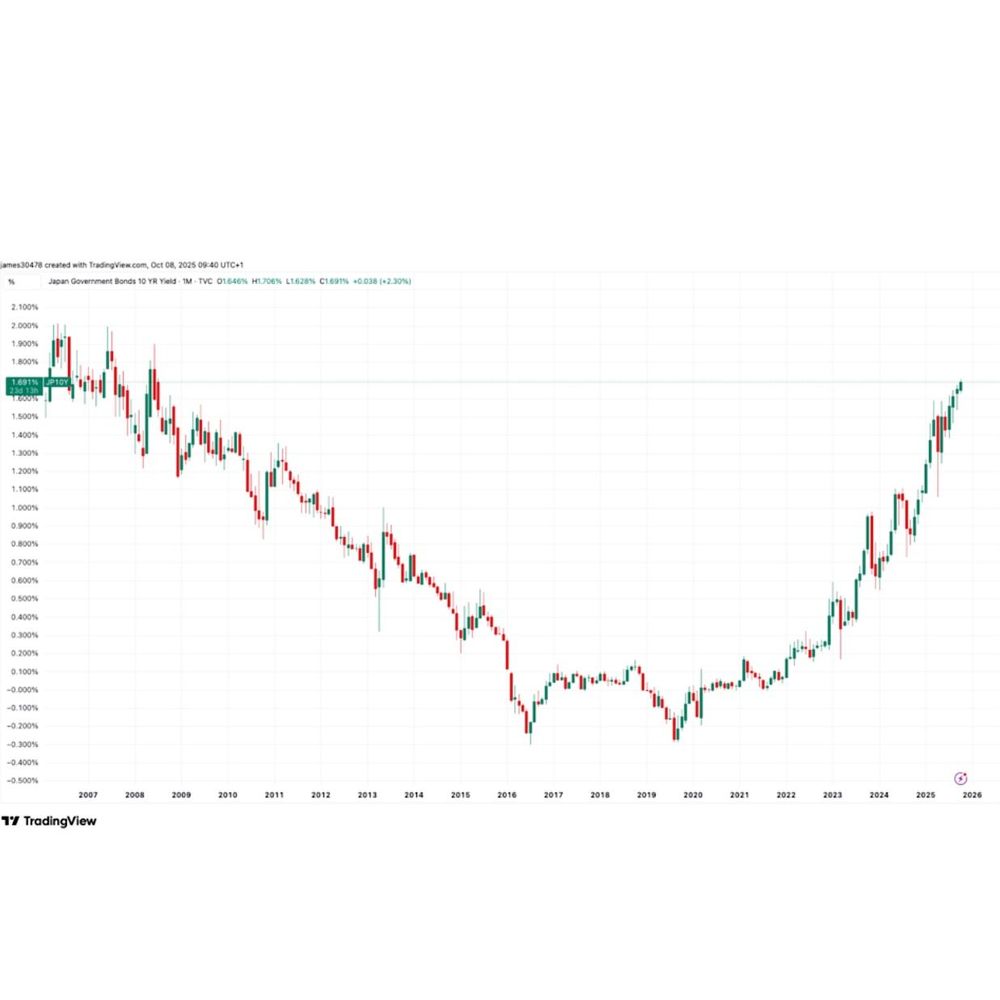
Japan’s 30-year government bond yield surged to 3.445% on December 4 — the highest level ever recorded. The move came just hours after the Ministry of Finance announced a massive 700 billion yen auction, amplifying concerns about Japan’s expanding borrowing needs and long-term fiscal sustainability.
For decades, the Bank of Japan kept long-term yields suppressed through ultra-loose monetary policy. But the latest spike marks a psychological turning point: investors now demand higher compensation for holding Japan’s long-duration debt as rate hikes and fiscal expansion loom.
Takayuki Miyajima of Sony Financial Group explains the shift: “Speculation about a BOJ rate hike and concerns about fiscal expansion are driving selling pressure… but high yields may still support strong demand at the upcoming auction.”
💴 Fiscal Stimulus Plans Add Fuel to the Fire
Prime Minister Sanae Takaichi’s new stimulus package has heightened fears of accelerating government debt issuance. More spending means more long-term bonds — and the market is already signaling discomfort.
Though rising yields can attract institutional buyers, they also increase the government’s cost of borrowing, placing added strain on Japan’s already stretched fiscal position.
📊 Market Split: Opportunity vs. Risk
Financial institutions are divided on what happens next:
- Shoki Omori (Mizuho Securities) warns of weak demand at the auction due to policy uncertainty.
- Miyajima (Sony Financial) argues yields are now attractive enough to draw long-term buyers.
This division reveals a deeper shift: Japan is no longer seen as a stable, low-volatility debt market. Instead, investors are navigating a new landscape defined by monetary tightening and fiscal risk.
🌍 Why This Matters Globally
Surpassing the previous 3.41% record, the new yield aligns Japan more closely with other developed economies and signals that the era of “free money” is fading worldwide.
ATH.LIVE analysts argue that Japan’s yield spike is not an isolated event — it is a global warning sign. They identify three systemic implications:
- The low-rate era is ending. Japan was the last holdout of extreme monetary easing.
- Sovereign debt risk is returning. Higher yields mean rising interest burdens for governments.
- Capital is rotating. High-yield, lower-risk assets will siphon liquidity from speculative markets.
In their view: “Japan is no longer the exception — it is the signal.”
🔭 What Comes Next
If the BOJ proceeds with a long-anticipated rate hike and the government maintains aggressive spending, yields may continue rising into 2026.
Key metrics to watch:
- The results of the 700 billion yen auction
- BOJ forward guidance at upcoming policy meetings
- Japan’s revised 2026 fiscal plan
Each will determine whether this is a temporary shock — or the beginning of a structural transformation in Japan’s financial ecosystem.
🧩 TL;DR
- Japan’s 30-year yield hit a record 3.445% amid a massive debt auction.
- Markets expect BOJ tightening and long-term fiscal stress.
- Institutions are split on whether current yields will attract strong demand.
- ATH.LIVE analysts see Japan’s shift as a global signal that the ultra-low-rate era is ending.
- Upcoming auction results and BOJ guidance will determine the next major move.