💴 Japan’s Bond Shock: What a 1.965% Yield Means for Global Liquidity — and Bitcoin’s Future
Japan’s two-decade-high bond yields signal the end of the “free money” era — tightening global liquidity, rattling risk markets, and reshaping the long-term case for Bitcoin.
⚡ Quick Facts
- Japan’s 10-year government bond yield hit 1.965% — the highest since June 2007.
- Move reflects the Bank of Japan’s ongoing shift away from ultra-loose monetary policy.
- Higher JGB yields weaken the global yen carry trade, tightening liquidity across markets.
- Risk assets — including Bitcoin — may face short-term pressure as capital reprices.
- ATH.LIVE warns: this is part of a broader “liquidity reset” reshaping global finance.
📈 A 1.965% Yield: Japan’s Financial Earthquake
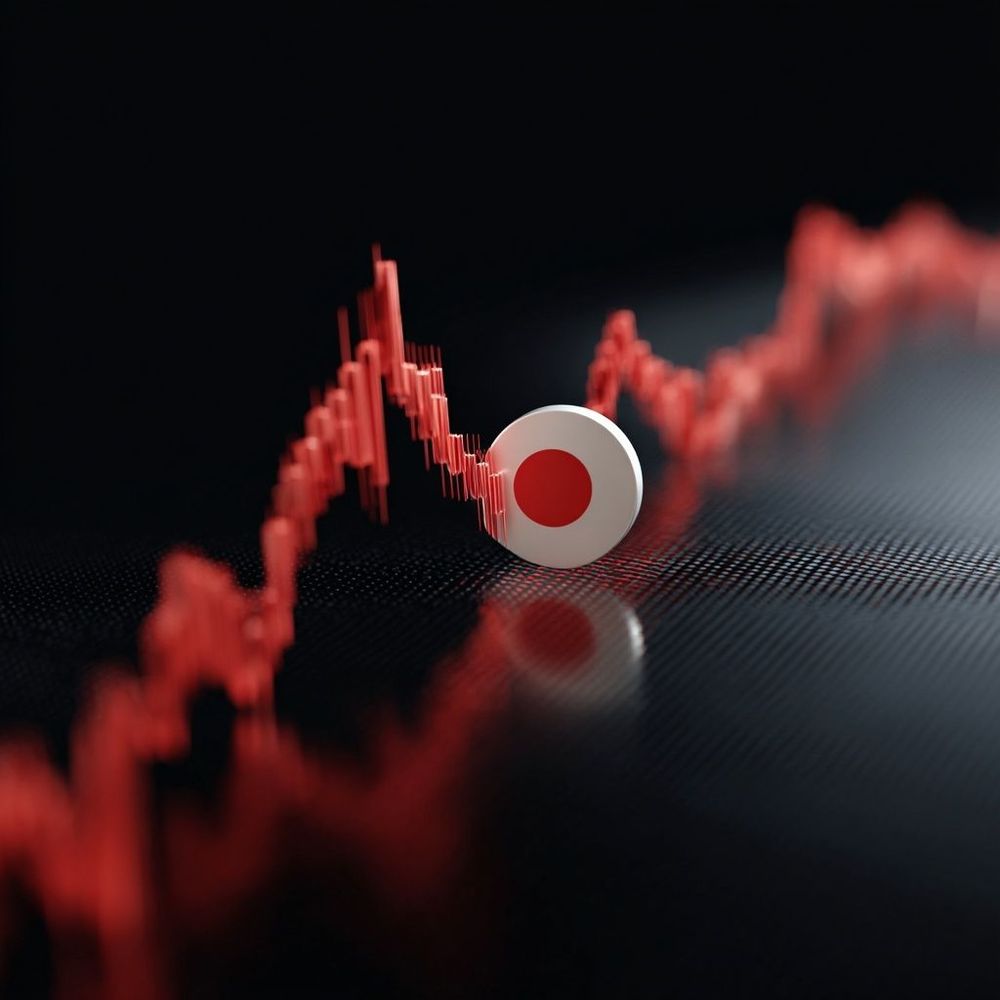
On December 8, Japan’s 10-year bond yield surged to 1.965%, a level untouched since 2007. The catalyst: the Bank of Japan’s policy normalization — the slow, deliberate dismantling of its decades-long near-zero-rate regime.
Governor Kazuo Ueda set the tone clearly:
“We will weigh the pros and cons of rate hikes carefully, adjusting policy as appropriate.”
Translation: Japan is not stepping on the brakes, but the days of infinite cheap yen liquidity are fading.
💸 The Death of the Yen Carry Trade — Slowly, but Surely
For years, the yen carry trade has been one of the invisible engines of global finance. Borrow cheap yen → invest in higher-yield assets → profit. Simple. Powerful. Systemic.
But rising Japanese yields weaken that logic. Suddenly, yen funding isn’t free anymore.
- 📉 Higher JGB yields → yen becomes more attractive to hold
- 🔄 Global capital rotates → carry trades unwind
- 🌍 Liquidity tightens → risk assets feel the pressure
And yes — that includes U.S. tech stocks, emerging market debt… and crypto.
🌍 Global Bond Markets: The Real Shockwave
The danger now isn’t Japan itself — it’s the chain reaction:
- Higher Japanese yields divert money away from U.S. Treasuries
- Which keeps U.S. yields elevated
- Which raises global borrowing costs
- Which pressures nearly all risk assets
The last time Japan’s yields sat above 1.9%? 2007 — the eve of global financial turmoil.
🗣️ Arthur Hayes: “When Japan Tightens, Everyone Feels It”
BitMEX Co-founder Arthur Hayes didn’t mince words:
“When the Bank of Japan steps away from yield-curve control and lets JGB yields rise, global liquidity tightens and all risk assets, including crypto, feel the impact.”
ATH.LIVE analysts agree — but with nuance.
🔍 ATH.LIVE: Short-Term Pain, Long-Term Strength for Bitcoin
ATH.LIVE frames Japan’s yield surge as part of a broader macro transformation: the global liquidity reset.
-
Liquidity Reset
As cheap money disappears, markets are forced to reconsider fundamentals. Bitcoin’s fixed supply becomes more valuable in a world built on debt. -
Market Structure Shift
Capital moves toward assets that survive high-rate regimes. Bitcoin could emerge as a structural hedge. -
Regional Chain Reaction
Japan’s changes ripple through Asia — including Thailand and Southeast Asia — where investors seek assets insulated from currency and fiscal instability.
🏦 The End of “Free Money” — And the Start of Something New
The bigger story isn’t the yen carry trade. It’s the end of an entire economic era.
For 15+ years, global markets were addicted to zero rates, endless liquidity, and cheap credit. Now that drug is wearing off.
In a future defined by:
- higher rates
- higher debt
- higher geopolitical risk
- lower liquidity
— only assets with scarcity and neutrality are positioned to thrive.
That’s where Bitcoin stands alone.
🧩 TL;DR
- Japan’s 10-year bond yield hit 1.965%, the highest since 2007.
- The BOJ’s tightening signals a major shift in global liquidity.
- Carry-trade unwinds and rising global yields could pressure risk assets short-term.
- ATH.LIVE: This “liquidity reset” strengthens Bitcoin’s long-term appeal.
- In a world of scarce liquidity, scarce assets win — and Bitcoin tops that list.