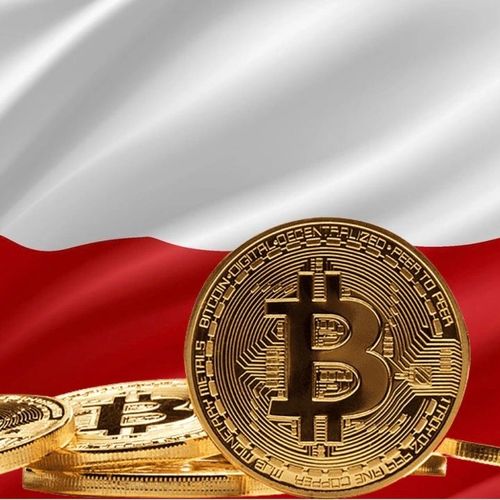
🇵🇱 Poland Blocks Its Crypto Bill — Leaving Bitcoin in a Legal Vacuum as the EU Tightens Rules
The Sejm fails to override President Nawrocki’s veto, freezing Poland’s MiCA alignment and plunging its crypto sector into uncertainty just as Europe enters its strictest regulatory era.
⚡ Quick Facts
- Poland’s Sejm fails to override a presidential veto on the country’s key crypto regulation bill.
- The bill was intended to align Poland with the EU’s MiCA framework.
- Prime Minister Donald Tusk cites national security concerns tied to Russian and Belarusian actors.
- Poland remains without updated AML, licensing, or oversight mechanisms for crypto firms.
- Analysts split: short-term freedom for Bitcoin, long-term risk for institutional capital.
🚫 The Veto That Stopped Poland’s Crypto Pivot
Poland’s lower house of parliament, the Sejm, has failed to override President Karol Nawrocki’s veto on a proposed crypto regulation bill. The bill aimed to bring Poland in line with MiCA — the EU’s sweeping Markets in Crypto-Assets framework — but now sits dead in the water.
Prime Minister Donald Tusk positioned the legislation as a national security priority, citing crypto flows linked to Russian and Belarusian entities.
“Parts of Poland’s crypto market are infiltrated by Russian and Belarusian entities. This bill is essential for giving authorities the tools they need.” — Donald Tusk
With the veto intact, none of these proposed protections will be enacted.
⚖️ Poland’s Crypto Landscape: A Legal Grey Zone
Poland is now in a regulatory no-man’s land precisely as the EU advances into a tightly unified MiCA environment.
Short-term consequences include:
- No new restrictions on Bitcoin trading.
- No licensing clarity for exchanges.
- No institutional-grade certainty.
- Existing operators remain under outdated, fragmented rules.
Long-term risks:
- Crypto firms may relocate to MiCA-compliant states.
- Poland could lose ground in Web3 innovation.
- Institutional Bitcoin products may avoid the Polish market.
The paradox: more freedom today, less credibility tomorrow.
📊 ATH.LIVE: Regulatory Vacuum May Boost Short-Term Bitcoin Adoption
Analysts at ATH.LIVE argue that a regulatory pause can temporarily benefit Bitcoin, especially in countries where institutional oversight remains underdeveloped.
“Historically, markets react positively to regulatory delays in the early phase. Less friction enables higher participation and experimentation.” — ATH.LIVE
The veto, they add, reinforces Bitcoin’s role as:
- a neutral asset independent of political cycles,
- a hedge against government indecision,
- a tool for younger investors and digital nomads seeking autonomy.
ATH.LIVE expects a short-term uptick in grassroots BTC activity inside Poland.
🏦 Institutional View: Legal Uncertainty Is the Real Threat
Not everyone agrees with this optimistic near-term view.
European regulatory analysts warn that:
- Institutions avoid unclear rules.
- Venture capital follows compliance stability.
- Major Bitcoin and Web3 firms choose predictable, regulated jurisdictions.
“Crypto companies don’t fear rules — they fear inconsistent rules.”
Lithuania, Malta, and Estonia are already emerging as potential beneficiaries of Poland’s stalled oversight.
📉 Timing Couldn’t Be Worse for Poland
Poland has one of Europe’s lowest rates of successful veto overrides. Politically, the outcome is unsurprising — but economically, the timing is critical.
Europe is entering its most regulated crypto phase in history, and Poland’s indecision risks placing it outside the institutional flow of capital.
🔮 What Happens Next? Three Realistic Scenarios
Analysts outline three likely outcomes:
- The bill is rewritten and reintroduced in 2026.
- EU pressure forces MiCA adoption through harmonization.
- Crypto companies leave Poland entirely for regulated EU hubs.
In all cases, Bitcoin remains unaffected. The question is whether Poland remains relevant in the next institutional wave.
🌐 Poland’s Position in the European Bitcoin Economy
With the veto unchanged, Poland occupies a volatile middle ground: not restrictive enough to deter retail adoption, not stable enough to attract institutions.
ATH.LIVE summarizes the tension:
“Regulatory hesitation often strengthens Bitcoin’s appeal — yet the broader market may migrate toward safer, fully regulated European environments.”
The delay does not end Poland’s crypto sector, but it does cast uncertainty over its ability to participate in Europe’s next major Bitcoin cycle.
🧩 TL;DR
- Poland’s Sejm failed to overturn the presidential veto on its crypto bill.
- The country remains outside MiCA’s regulatory alignment.
- Short-term: more freedom for Bitcoin and retail experimentation.
- Long-term: potential loss of institutional investment and Web3 innovation.
- Poland risks falling behind as Europe moves toward strict regulatory harmonization.
- ATH.LIVE expects short-term BTC growth but warns of long-term consequences.