Thailand Pushes 99-Year Leases to Spark Tokenized Property Boom
Thailand Bets on 99-Year Leases — A Tokenized Property Revolution Begins
Developers say short leases are killing growth. Extending them to 99 years could turn Thailand into the world’s next crypto-real estate hotspot.
⚡ Quick Hits
- 🏝️ Proposed reform: extend foreign leases from 30 → 99 years
- 💰 GDP growth (2025): below 2% — weakest in a decade
- 💸 Household debt: ~91% of GDP — among Asia’s highest
- 🧳 Tourism revenue: ~400B THB yearly across key provinces
- 🌿 Gen Z shift: 70% prefer sustainable stays, 84% pay extra for eco options
- 🪙 Digital turn: property tokens + crypto payments are already live in Phuket
🏗️ The 99-Year Play: Building the Digital-Native Economy
Thailand’s property sector is staring down a generational reset. Developers like Proud Group and Sansiri argue the next investors won’t queue at banks — they’ll mint homes as tokens.
At the Thailand Economic Outlook 2026 forum, Proud Group CEO Pasu Liptapanlop cut it clean:
“Thai law already lets us fractionalize property — even by a single square meter. Digital tokens are the new key to unlocking global investment.”
Extending leases to 99 years would finally give these on-chain assets real longevity — a chance to merge Web3 infrastructure with real-world liquidity.
💣 The Debt Wall
Thailand’s old growth engines — exports, tourism, consumption — are misfiring. Household debt near 91% of GDP is choking demand, while a strong baht crushes exports.
Sansiri’s CSO Phumipak Julmanichoti calls it bluntly:
“Household debt has broken the market’s backbone. Without new capital inflows, we’re stuck in stagnation.”
Developers see the exit not in banks — but in wallets. Foreign crypto-native investors, especially Gen Z, are Thailand’s new liquidity class.
🏠 From Titles to Tokens
Thailand is quietly leading Asia’s real-estate-token revolution. The Securities and Exchange Commission (SEC) already regulates digital-asset offerings tied to property.
Proud Group is tokenizing luxury projects — letting investors own micro-shares with yield paid via blockchain. Sansiri experiments with hybrid models, building homes for locals locked out of credit — bridging DeFi and dirt.
🌱 Gen Z Doesn’t Buy Square Meters — They Buy Meaning
Sustainability is now a market filter:
- 70% of Gen Z travelers choose eco-destinations
- 84% will pay more for verified green design
For Thai developers, that means eco-engineered, token-verified projects — smart utilities, renewable energy, and on-chain proof of impact.
Even luxury villas are morphing into “branded sustainable residences” — part hotel, part blockchain asset.
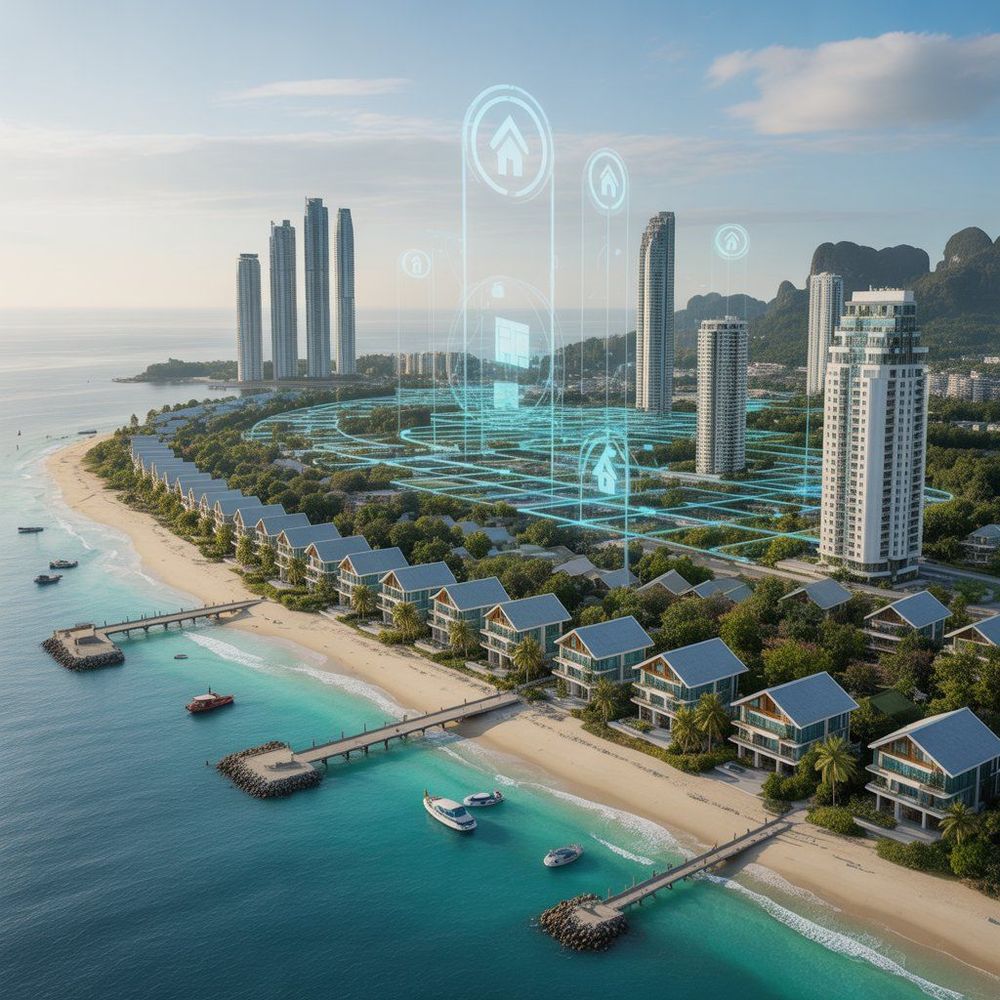
🪙 Phuket: Sandbox for a Tokenized Paradise
Phuket has become Thailand’s crypto lab. Developers there already accept stablecoins and digital tokens for property deals — skipping traditional banks.
The Bank of Thailand, SEC, and Finance Ministry are piloting the Digital Tourist Wallet (limit 50K–500K THB/month). Next step? Buying homes, condos, maybe even yachts — directly via blockchain.
If it scales, Thailand could be Southeast Asia’s first fully tokenized tourism-to-real-estate loop.
📜 Why 99 Years Changes Everything
Thirty-year leases don’t cut it for institutional or crypto-fund investors. Ninety-nine years transforms property tokens into long-horizon digital assets, competitive with Vietnam, Malaysia, and Singapore.
Developers stress this isn’t a land grab:
“After 99 years, the land still returns to the state — but during that time, it fuels liquidity, jobs, and innovation.”
🔮 2025–2026: Thailand’s Make-or-Break Window
Analysts say the next 18 months decide Thailand’s place in the Web3 economy. Pass the 99-year law + scale digital regulation → become Asia’s Gen Z investment hub. Miss it → watch capital flow to friendlier blockchains abroad.
“This isn’t about selling soil,” one forum speaker said. “It’s about selling the future.”
TL;DR
- 📜 Developers push to extend foreign leases to 99 years
- 🪙 Goal: make tokenized property a global asset class
- 🏦 Debt crisis and weak GDP force Thailand to seek new capital
- 🌍 Gen Z + crypto investors emerge as growth engine
- 🏝️ Phuket leads the tokenized-real-estate experiment
- 🔥 2025–2026 = reform window — or lost decade
Recent News



All Time High • Live
Have questions or want to collaborate? Reach us at: [email protected]